
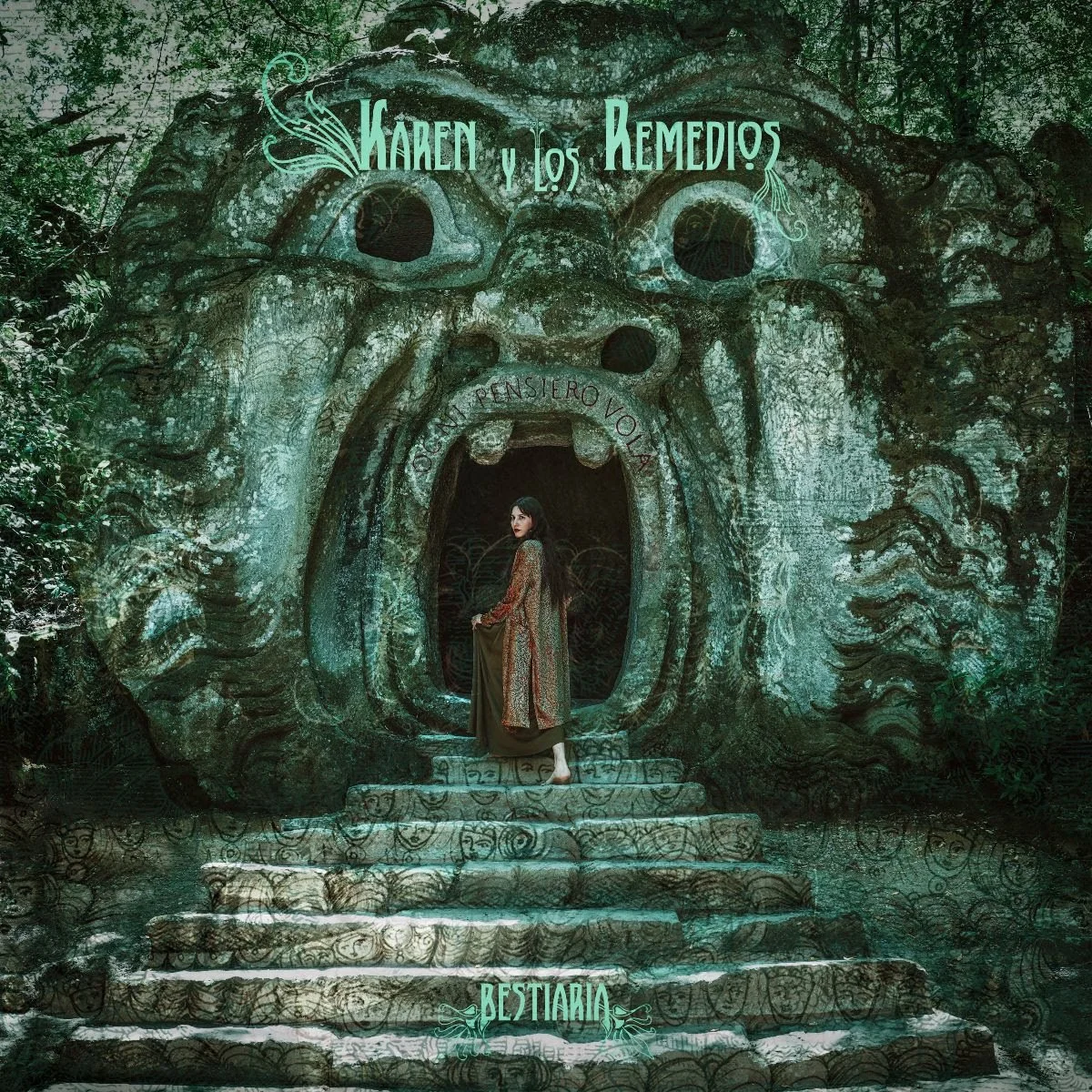
The Mexico City based trio has just released their sophomore album, Bestiaria, on ZZK Records. The twelve tracks of Bestiaria are dealt out like a tarot card reading: creatures, symbols and tales that resonate differently depending on the listener. Karen y Los Remedios create a universe in which the stories in the songs drift between magic, desire and nurture— and perhaps even death. Ana Karen’s lyrics drip with ambiguity, sometimes coming through like love poems, other times holding up a mirror. “Mayahuel”, one of the downtempo cumbias on the album, tells the story of the Mexican goddess of agave and fertility. With magical, sensual images, the song invokes a spirit who died and fell from the sky, to be reborn as the humble plant that gives us mezcal.
Opening track “Curandera” paves the way for the rest of the album’s spellbinding journey, Ana Karen’s spectral vocals merging with horror synth, the beat dragging us on to the dancefloor. Lost in the rhythm, Ana Karen journeys through landscapes of desire and lust in more introspective songs like “Ninfa” or the majestic cover of Tropa Vallenata’s “Satanás”.
The band was just announced to perform at Treefort Music Festival in Boise, ID, between March 31 and April 4th.
Frontwoman, Ana Karen, tells us 5 more things about this new album:
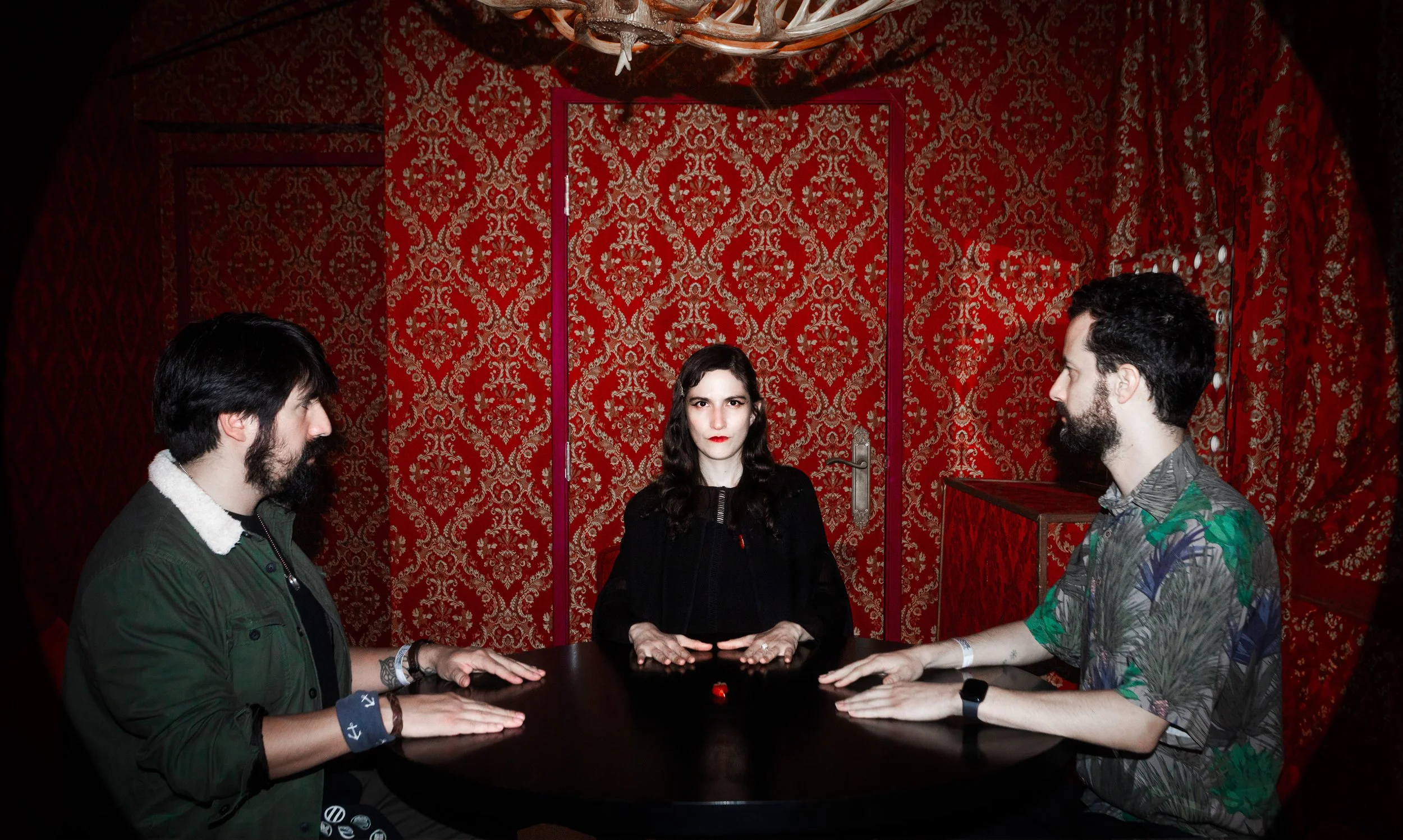
You've said the album is similar to getting a tarot reading. If you were to pull 3 cards to represent this album, what would they be?
I think about many but I think right now:
The Empress
The Moon
The High Priestess
After the cult success of your debut album, what was the writing process like for Bestiaria, and what was it like getting back into the studio to record?
Making Silencio was a very direct expression of feelings I’d experienced over a long period of time. Making Bestiaria felt more like a mission, a commitment to introspection through oral tradition, literature, and mythology mixed with my own experience, even unconsciously speaking.
The album’s attention to ancestral and traditional ways is clear. How does cumbia help bring the past into the present in your work?
After performing and seeing how people respond to cumbia, I’ve come to believe that its percussion, like that of other rhythms, carries echoes of ritual and trance. It’s no surprise for me as cumbia is said to have roots in Afro-Colombian funeral traditions. Like many of the themes on the album, these rhythms have accompanied us as humans for a very long time. Maybe our souls recognize them when we hear them.
The videos accompanying the album’s singles are just as lush and vibrant as the music. How do visuals contribute to the overall vision of Karen y Los Remedios?
Little by little, I think I’ve gotten better at translating the essence of the project visually, though it hasn’t been easy. I love creating visuals too, I have had the pleasure to collaborate with amazing people. I’ve been expressing myself and experimenting through them, and I love it as much as writing songs. I think it is an essential part of the project and I hope I can continue exploring audiovisual language as well.
What advice has someone passed on to you that you’d like to share with your listeners?
Believe in yourself. Create for your soul, not for recognition.
